
Playboy Nude-In
Movement at Grinnell College
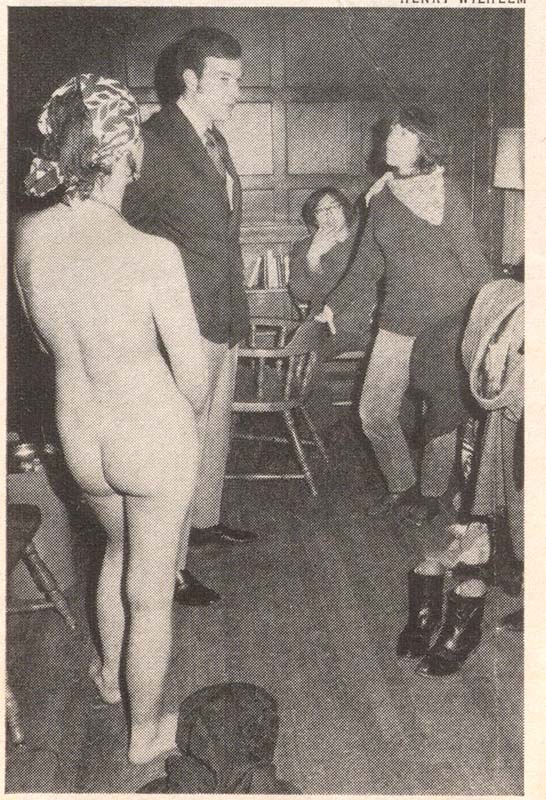
Feminist movements existed along side Anti-War movement and counterculture movements at Grinnell College. Students created the Women’s Liberation groups and sought recognition for their contributions to other movements, better access to birth control, and social equality of men and women on campus. When Playboy representative Brice Draper was invited to speak on campus as part of program on sex education, students from the local SDS group were spurred to action. On Wednesday, February 5th, 1969, ten students disrobed during Draper’s talk. They passed out leaflets titled “Playboy Magazine is a money-changer in the temple of the body” and played the song “You’ve got to Walk That Lonesome Valley” on guitar. One protester reportedly asked Draper to pose nude for a girl photographer, which he declined. This demonstration met with backlash from college administration, local law enforcement, and national media. Eight of the students were charged with indecent exposure and fought a lengthy court battle over the incident. Photographer Henry Wilhelm later sued the college for liable, as he was misattributed as organizing the demonstration and that misinformation was parroted in national media reports.
Movement in the USA
This protest emerged during the second-wave feminist movement of the 1960s to 1980s, which focused on achieving substantive equality-ensuring policies and practices addressed systemic discrimination to produce equitable outcomes. While advocating for workplace, educational, and social equity, second-wave feminists also championed sexual freedom and prioritized women’s sexual autonomy. At first glance, opposing Playboy might appear contradictory for proponents of sexual liberation. However, feminists argued that pornography perpetuated the reduction of women to one-dimensional objects existing solely for male gratification, with little regard for female pleasure. This disparity was exemplified by the absence of nude male imagery designed for women’s consumption. Pornography further imposed rigid beauty standards, subjecting women to new forms of societal scrutiny. In essence, feminists sought a vision of sexual liberation rooted in mutual respect and emotional equality, contrasting sharply with pornography’s promotion of impersonal, exploitative dynamics. Prominent activists like Gloria Steinem elevated these critiques nationally; her undercover exposé, “A Bunny’s Tale,” revealed systemic sexism and exploitative conditions at Playboy clubs. The anti-pornography movement gained significant momentum in the late 1970s and early 1980s, becoming a defining feature of feminist activism during this era.